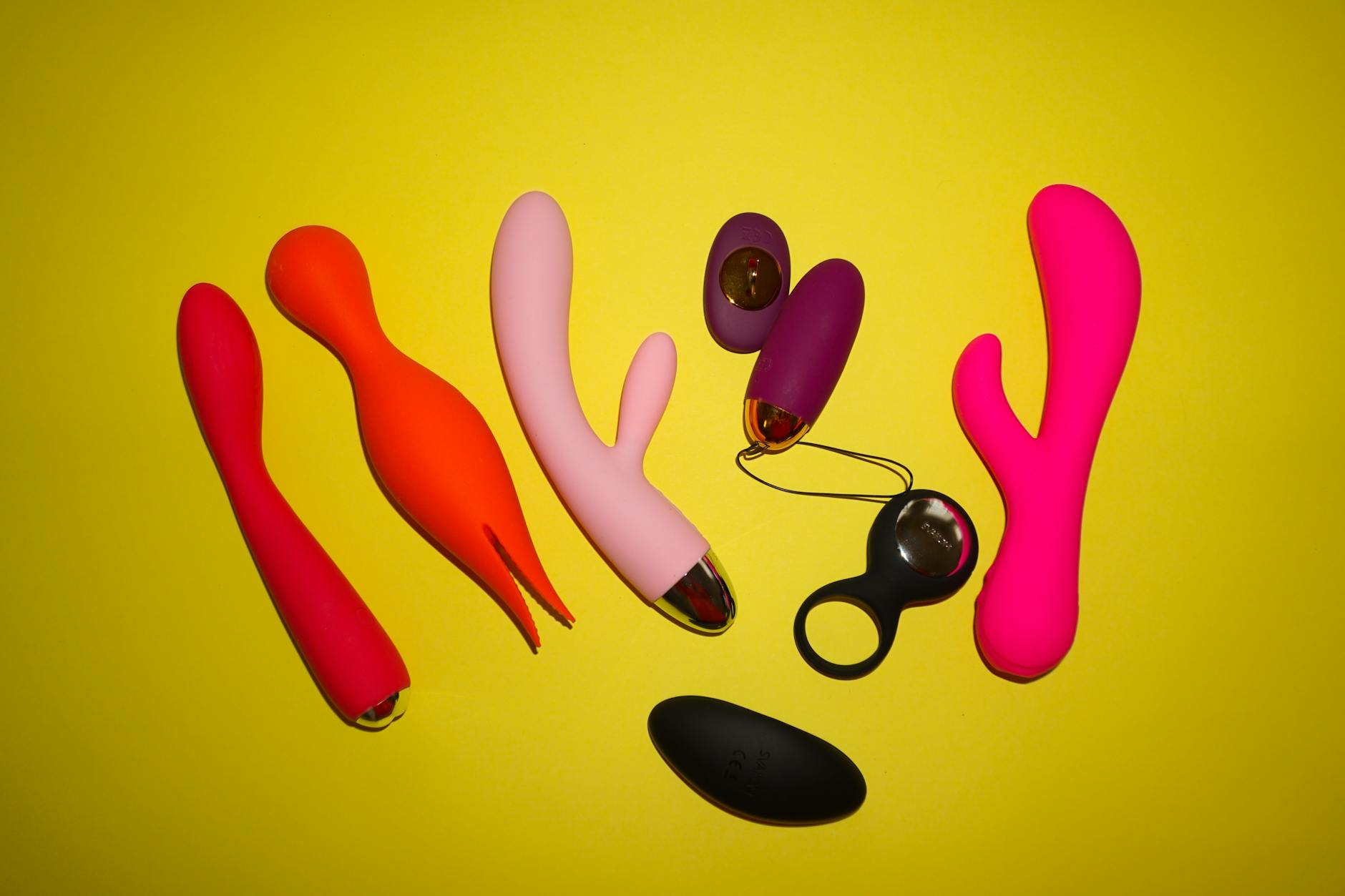
Here's what nobody tells you about lost sexual confidence
Lost sexual confidence isn't the same as low libido. You can have desire and still feel disconnected from your body's response. You can want your partner and still feel nothing when they touch you. The gap between what you think should happen and what actually happens is where shame lives, and shame kills intimacy faster than anything else.
I've worked with hundreds of couples where one partner has lost sexual confidence, and the pattern is always the same. It starts with a disruption. A medical event, a medication change, stress, relationship friction, aging, pregnancy and postpartum recovery, grief. The body responds differently than it used to. Instead of moving through it, the person decides they're broken and stops trying. Their partner picks up on the withdrawal. Resentment or anxiety follows. The feedback loop dies.
The good news: it's restartable. And lemon vibrators, specifically, are one of the most direct ways I see people restart it.
Why sexual confidence crashes
Sexual confidence is built on three things: predictability, pleasure, and permission. When any of those breaks, confidence goes with it.
Predictability is the sense that your body will respond the way it usually does. Touch your skin, feel pleasure. Focus your mind, build arousal. That's the baseline contract with your own nervous system.
Pleasure is the actual sensation you get from stimulation. Sometimes it's strong, sometimes subtle, but it's there.
Permission is the internal voice that says you deserve this, that your pleasure matters, that slowing down to feel something is not selfish.
When you lose one of these, you lose confidence. When two or all three collapse, you lose the will to try.
What a lemon vibrator actually resets
Lemon vibrators, including the Lem, work differently than traditional vibrators. They use air-suction technology instead of buzzing friction. This distinction matters more than most people realize when you're rebuilding confidence.
A traditional vibrator asks your body to engage with a sensation it might be too tired or too sensitive to handle right now. An air-suction lemon clitoral vibrator communicates with your nerve endings without the same mechanical demand. The sensation is novel, focused, and much easier to feel even when your arousal is low.
Novelty breaks the shame spiral. If you've spent months unable to feel anything with your usual toy or your partner, a new sensation shortcuts the "my body is broken" narrative. The Lem feels like something, clearly and immediately. That's Step One.
Focus is Step Two. Air suction concentrates sensation in a smaller area than broad vibration. This means you don't need high arousal or perfect conditions to register pleasure. It works at lower intensities. It works when you're tired. It works when you're skeptical.
That simplicity is what rebuilds permission. Instead of fighting with your body or performing for a partner, you're just exploring a sensation that feels good. No pressure to come, no pressure to perform, no comparison to how you used to feel.
The mechanics of rebuilding through a lemon vibrator
If you've lost sexual confidence, here's how I recommend approaching this.
First, use it alone. Not as a test, not as proof that you're still capable of orgasm. Just as exploration. Set aside fifteen minutes with no agenda. Charge the Lem if you're starting fresh. Find a private space where you won't be interrupted. You're not performing for anyone, not even for yourself.
Start at the lowest setting. The point is to feel something, not to reach a destination. Many people who've lost confidence are rushing because they've internalized the pressure to "get there." Slow down more than feels necessary.
Pay attention to where you feel it and what the sensation reminds you of. Curiosity is the antidote to shame. The moment you move from "why isn't this working" to "what does this feel like," you've shifted your nervous system out of fight-or-flight and into rest-and-digest. That's when sensation actually registers.
Do this a few times alone before involving a partner. That separation is crucial. You need to rebuild the baseline promise to yourself that your body can feel things without an audience. Three to five solo sessions usually rewires that.
Then, if you have a partner, introduce it together with absolute honesty about where you are. Not "I'm trying to fix myself" but "I want to explore something new with you." The framing shifts the energy from corrective to connective.
Why partners often resist at first
Many people with partners hesitate to bring in a lemon vibrator because they fear it signals dissatisfaction or unfaithfulness. That's understandable and also a story worth examining.
A device is a tool, not a verdict on your partner's touch. If you've lost sexual confidence, the problem isn't usually your partner. It's a disruption in your own nervous system's ability to receive pleasure. A lemon clitoral vibrator doesn't replace your partner's touch. It teaches your body how to feel again so that when your partner touches you, the nervous system remembers how to respond.
I've watched couples who were nearly separated by lost sexual confidence reconnect completely once they stopped treating the vibrator as a threat and started treating it as a bridge. The person with lost confidence gets the permission and novelty they need to rebuild their baseline. The partner gets to participate in that rebuild rather than watching their partner withdraw.
The conversation itself rebuilds intimacy. "I want to feel close to you again, and I need this tool to get there" is a vulnerable, honest thing to say. Vulnerability is where real connection lives.
The timeline and what to expect
Rebuild usually takes four to eight weeks if you're consistent. That doesn't mean you'll suddenly feel like you did ten years ago. It means you'll feel like yourself again, which is what matters.
Week one and two: novelty phase. Everything feels different and interesting, even if arousal is still muted. This is normal and good.
Week three and four: your nervous system starts registering the sensation as familiar. Pleasure begins to deepen. Some people have their first strong orgasm here. Some don't. Both are fine.
Week five through eight: integration. You're starting to feel pleasure with other forms of touch again. Your partner's hands feel different. Your own touch feels different. The feedback loop is restarting.
After that, the Lem becomes a regular part of your toolkit, not a crutch or a fix. You use it because it feels good, same as you use anything else you enjoy.
One thing I always tell couples: don't expect one device to fix years of accumulated resentment or disconnection. If the lost sexual confidence is a symptom of deeper relationship fracture, you may need a couples therapist alongside this physical reset. But if it's physiological or circumstantial, a lemon vibrator genuinely can move the needle.
Common blocks and how to move through them
If you're two weeks in and not feeling anything yet, check three things. First, are you actually alone and unrushed, or are you trying to do this while half-listening for your partner? Your nervous system knows the difference. Second, are you using water-based lubricant? Even if you don't usually need it, try it now. Third, are you starting on the absolute lowest intensity, or are you jumping to higher settings? Lower is almost always better when rebuilding.
If shame keeps creeping in, that's a sign to slow down further or talk to a therapist. Shame is a signal that you're pushing against your own internal resistance, not that something's wrong with you.
If your partner is resistant, don't push. Instead, talk about what the resistance is actually about. Is it jealousy? Fear of inadequacy? Discomfort with sex toys in general? Those are different conversations, and each one has a different path forward. The lemon vibrator isn't the problem. The unstated tension is.
When to know this is working
You'll know the rebuild is working when small things shift. You feel more comfortable taking your clothes off. You initiate touch with your partner without the weight of performance. You notice pleasure during regular sex without the lemon. You feel curious about your body again instead of critical.
These aren't achievements to celebrate with fanfare. They're quiet returns to normal. And that's exactly what you're aiming for.
Sexual confidence isn't about being the most adventurous or the most orgasmic. It's about trusting your own body to do what it does, without judgment or force. A lemon vibrator can be the bridge that gets you back to that trust. But the trust itself comes from you.
People also ask
Can a lemon vibrator fix intimacy problems in a long-term relationship?
A lemon vibrator can reset the physical feedback loop, which sometimes unlocks emotional reconnection. But if the relationship problem is deeper than lost sexual confidence, the device alone won't fix it. Use it as part of a bigger picture: honest conversations, possibly therapy, and genuine willingness from both people to rebuild. The vibrator is a tool, not a therapist.
How do I introduce a lemon sucker to my partner if I've been avoiding sex?
Start with honesty instead of the device. Say something like, "I've been withdrawn, and I want to change that. I found something that might help me feel more like myself. I'd like to try it with you." That conversation, not the device, is what rebuilds intimacy. Your partner will respond better to the vulnerability than to a surprise toy.
Is using a lemon vibrator alone considered cheating if I'm in a relationship?
No. Using a tool to rebuild your own sexual confidence is self-care, not infidelity. If your partner perceives it that way, that's a conversation about boundaries and insecurity, not about the lemon clitoral vibrator. Those conversations are worth having, though, because they point to deeper disconnection.
Why does a lemon clitoral vibrator feel better than my partner's touch when I've lost confidence?
Because the device asks nothing of you emotionally. Your partner's touch might carry pressure, history, or emotional baggage. The vibrator is just sensation. Once you rebuild baseline pleasure with the device, your partner's touch usually feels good again because your nervous system remembers how to respond to them.
How long until I stop needing the lemon vibrator and feel pleasure normally again?
Usually four to eight weeks of regular use. After that, you use it because it feels good, not because you're fixing a problem. Some people use it forever, and that's fine. Others cycle back to it when they need a reset. There's no timeline for "normal." You define what normal is.
What if the lemon vibrator doesn't help after two months?
If you've been consistent and feeling nothing, talk to a doctor. Lost sexual confidence sometimes has a medical root. Hormonal shifts, medication side effects, neurological conditions. A vibrator can't fix those, but a healthcare provider can. Pair the physical exploration with professional input if the device alone isn't moving things.
Sexual confidence is restartable. You haven't lost the capacity for pleasure. You've lost the permission and the pathway. A lemon vibrator can give you both. The rest is time, patience, and the willingness to explore without judgment.
Start small, rebuild big
Rebuild usually looks less dramatic than you think it will. It's not about rediscovering wild passion. It's about feeling like yourself again. It's your body remembering that pleasure is possible, that you're not broken, and that slowing down to feel something is worth your time.
If you're stuck in the shame spiral, reach out. Contact Hello Nancy if you want to talk through where you are or need guidance on rebuilding intimacy with a partner. The work of reconnecting with yourself is worth doing, and you don't have to do it alone.