Let's name what happens
Relationships drift. Not because anyone failed, but because life keeps moving and sometimes pleasure stops moving with it. Work, kids, stress, aging parents, financial worry. Sex either becomes transactional or disappears entirely. And here's the quiet part nobody says out loud: after months or years of that, the idea of restarting feels scarier than the distance itself.
Most couples in this spot don't need therapy to figure out what went wrong. They need permission to try something without the weight of "fixing the relationship" attached to it.
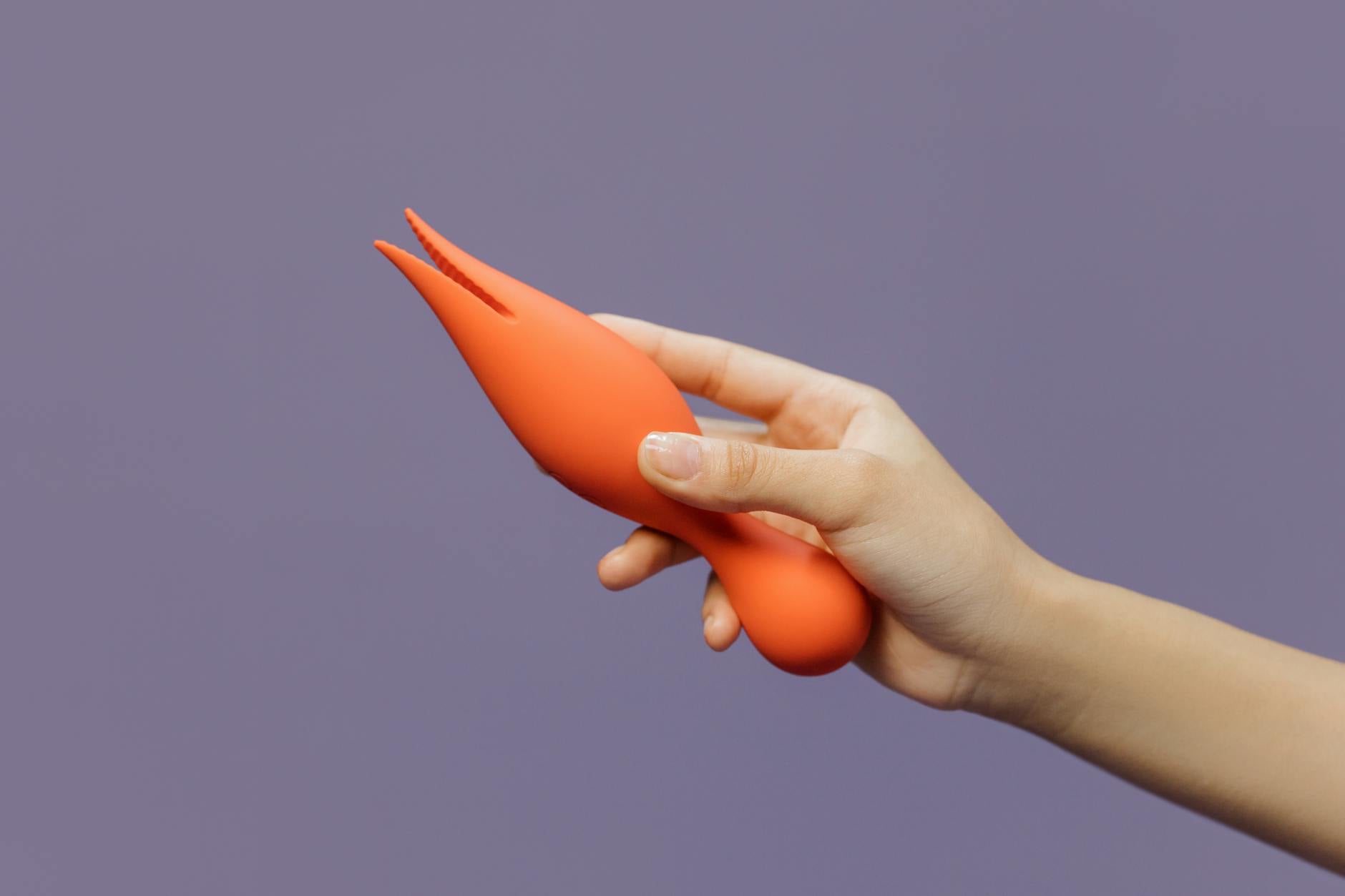
A lemon vibrator can be that permission.
Why pleasure (not talk) comes first
I work with couples who've been stuck for two years, and almost every one has tried "having the conversation." Those conversations often go nowhere because you're negotiating from a place of resentment, shame, or numbness. Sex gets tangled up with all the stuff that's actually broken: trust, effort, attention.
Here's what most relationship advice skips: pleasure isn't a symptom of intimacy. It's a doorway to it. When you reconnect with sensation together, you bypass all the defensive armor you've built up. Your nervous system softens before your mind catches up.
Using a lemon clitoral vibrator with a partner isn't foreplay. It's a reset button that says: "I'm interested in what feels good right now, and I want to notice you noticing that."
The vulnerability that happens first
Let me be direct. If you haven't had sex in months or years, introducing a toy feels vulnerable in a way that a conversation doesn't. Words can hide. A vibrator can't. When you ask your partner to explore something new with you, you're saying: "I want to feel good, and I trust you here."
That's the actual intimacy moment. Not the orgasm. The yes.
Start here: "I've been thinking about us. I want to try something that might help us reconnect. Would you be open to that?" Not detailed. Not apologetic. Not a pitch. An invitation.
If they say no, that's data. Process that separately before moving forward. If they say yes, you've already begun rebuilding something.
How to introduce it without performance pressure
Most people default to one of two scripts. Either they vanish a toy mid-foreplay and hope nobody notices (awkward and kills the mood), or they make it a whole thing and suddenly there's an expectation attached.
The best entry point: frame it as exploration of sensation, not as a fix for arousal or orgasm. You might say: "I want to see what happens if we slow down and just notice what feels good. Can I show you something?"
Then: use the lemon vibrator on yourself first, with them watching. Not as performance. As genuine curiosity. Let them see your face, your breathing, how your body responds. This is the opposite of hiding. This is trust-building.
After a few moments, ask: "Want to try?" If they do, you apply it while they focus on sensation. Short sessions work better here. Five to ten minutes beats thirty. You're rewiring their nervous system to associate pleasure with presence, not with pressure to come.
What changes in the brain during this process
When you're disconnected, sex becomes goal-focused. Orgasm or nothing. That kills arousal before it starts because your brain is monitoring ("Is this working? Am I taking too long?") instead of receiving.
A lemon vibrator, used intentionally, flips that. The suction and pulse pattern activate different nerve pathways than friction alone. For the receiver, that novelty breaks the autopilot. For the partner applying it, there's this weird magic where attention becomes foreplay. You're watching. You're curious. You're not performing; you're present.
Over three to four sessions, couples report that touch starts feeling good again in other contexts too. Kissing. Hand-holding. Shower sex. The nervous system remembers: touch is safe here. This person is paying attention.
The conversation that happens after (not before)
This is where most guides get it wrong. They tell you to communicate first, then play. I've seen that backfire a hundred times because you're talking from a place of fear and analysis.
After you've reconnected through sensation, the conversation is different. You've got something to reference. You know what the other person's body does when they're present. You've seen them let go.
That's when you can say: "That felt different. That felt good." And they're not defending; they're remembering it too.
Then you can ask the real questions: "What did that bring up for you? What do you want more of? When did we stop touching like that?"
The answers come easier because you're not negotiating from opposite trenches.
Rhythm and timing matter more than you think
Don't jump into this mid-fight or mid-resentment cycle. That's the worst possible moment. Pick a time when you're both relatively settled. Weekend morning. After a walk. Somewhere you're not rushing.
Start slow. A lemon vibrator is intense; you don't need long sessions to shift something. Twenty minutes of genuine attention beats three hours of obligation.
And space it out. Once weekly, not nightly. You want each session to feel intentional, not routine. The anticipation between sessions is where the reconnection deepens.
When one partner is more interested than the other
It happens. One person is ready to explore; the other is hesitant or scared. Here's the truth: you can't force curiosity. But you can remove barriers to it.
Hesitation usually masks one of three things: fear of judgment ("Will they think I'm weird?"), fear of failure ("What if I can't orgasm?"), or fear of intimacy itself ("If we reconnect, what else might have to change?").
You address these separately from the toy. "I'm not introducing this because anything's wrong with you. I'm introducing it because I want to feel close to you again, and I think this might help both of us." That's it. Then you let them sit with it.
Many people need time. Don't push. Check back in a week or two. Sometimes the yes comes when they realize you're patient enough to wait for it.
The actual logistics (so it's not awkward)
Clean the lemon vibrator with warm water and mild soap before using it. Use water-based lube if you want to. Start on the lowest setting. Focus on the clitoral area; most people find direct stimulation better after a few moments of buildup.
When using it with a partner, communication is key. "Is this pressure okay? Too much? Want me to move?" These aren't clinical questions. They're foreplay. They're you paying attention.
If your partner isn't immediately comfortable, that's normal. Bodies take time to trust new sensations. Keep sessions short the first few times.
Most importantly: if it doesn't feel good, stop. This isn't about forcing pleasure. It's about giving yourself permission to seek it.
What happens in the weeks after
Couples report three shifts. First: they touch each other more casually. A hand on the back. A kiss that isn't leading somewhere. That's the nervous system saying touch is safe again.
Second: sex happens more often, but it feels less fraught. Less pressure. More actual desire.
Third (and this is the big one): they start talking about other things again. Because reconnection at the nervous system level opens up the rest of the relationship. You remember why you chose this person. You remember what their body feels like. You remember that you want to be close.
This isn't magic. It's neuroscience. Pleasure rewires the brain toward security and connection. When you share that with your partner, even for fifteen minutes once a week, you're literally rebuilding the intimacy circuits you've let go dormant.
FAQ
How long does it take to feel close again using a lemon clitoral vibrator?
Most couples feel a shift within three to four sessions. That doesn't mean passion returns overnight. It means the nervous system starts associating being close with feeling good. Real reconnection happens over weeks, not days. But you'll notice the change in small moments: more eye contact, more spontaneous touching, less awkwardness around sex.
What if my partner thinks using a vibrator means I'm unsatisfied with them?
That's a real fear, and it deserves a real answer before you introduce anything. Say this: "I want to explore this because I want us to feel good together. This isn't about you being enough or not enough. It's about both of us having access to more pleasure." If they still resist, it might point to insecurity that needs a separate conversation. But often, once they see how present it makes you, they get it.
Can a lemon vibrator actually heal a relationship?
No. But it can heal the physical disconnection that makes emotional reconnection possible. A vibrator is a tool, not a therapist. If the relationship has deeper issues—infidelity, financial betrayal, abuse—you need actual help. But if you've drifted and want to rebuild, yes, pleasure can be the first step back.
Is it weird to use a toy with a partner for the first time after years of nothing?
Completely normal. Most people feel awkward at first. That awkwardness usually dissolves within a few minutes once you realize nothing bad is happening. You're just two people noticing what feels good. That's it.
How often should we use a lemon vibrator to rebuild intimacy?
Once weekly is ideal. Enough to build momentum, not so often that it becomes routine or obligatory. If it starts feeling like homework, dial it back. The goal is genuine curiosity, not performance metrics.
What if we try this and nothing changes?
Then you've gathered information. Sometimes disconnection runs deeper than what a vibrator can address. That's when you consider couples therapy or a deeper conversation about whether the relationship is serving both of you. But at least you've tried something vulnerable together. That matters.