
Let's start with what you're actually nervous about
You're not worried the toy will be weird. You're worried the suggestion will be weird. You're running a mental script where your partner hears "the thing we're doing isn't enough" or "I want someone else's job." Neither is what you mean, and both are completely survivable conversations. But they require a setup.
Honestly, most couples introduce lemon vibrators or other clitoral toys the wrong way. They leave a browser tab open. They make a joke and wait for permission to mean it. They ambush the topic during sex when there's zero time to process. Then they both feel weird, and nothing happens for six months.
There's a better path.
The conversation is separate from the toy
Here's the move I recommend to almost every couple who walks into this: separate the idea talk from the toy talk.
The idea talk is about pleasure, not the product. It happens outside the bedroom, ideally not right before sex. You're saying something like: "I've been thinking about ways we could explore together more. I read that adding something like a lemon vibrator might feel good for me, and I wanted to see how you'd feel about experimenting." That's it. You're naming the idea. You're not holding up the toy. You're not asking them to perform enthusiasm right now.
Their job in that moment is just to say yes, no, or "let me think about it." You do not need their instant approval. You do not need them to jump in. You just need the door open.
The toy talk comes later. Once they've had a day or two to sit with the idea, you can talk specifics. What kind of lemon clitoral vibrator? When would you want to use it? Would they be involved, or would it be something you use solo first?

Photo by cottonbro studio on Pexels
Frame it as addition, not replacement
This is where the tone matters most. Your partner's brain is already running a fear script. Your job is not to convince them, but to make it clear you're not rejecting what you already have.
"I love what we do together. I also think exploring lemon vibrators could add something for me" is completely different from "I think we need to spice things up." One is collaborative. One feels like critique.
Here's the thing: they may have that same fantasy. They may have been wondering how to bring it up. People are walking around with unopened conversations all the time. Once you say it, suddenly you're not having a scary conversation. You're having a planning conversation.
If they push back, don't defend the toy. Listen to what's underneath. "That makes sense you'd feel that way" is a sentence that costs nothing and buys you a lot of trust. Then you can ask: What would make this feel better to you? Do you want to research it together? Do you want to pick one out? Do you want to wait?
Practical timing beats perfect timing
People overthink when to have this conversation. They're waiting for the perfect romantic moment or the right vibe. Meanwhile, six months pass and they never say anything.
The best time is when you're both calm, alone, and not in the middle of a different conflict. Not an hour before sex. Not when you're stressed about work. Not at 11 p.m. when you're both exhausted.
Wednesday afternoon. A walk. Your car. Breakfast on a random Saturday. You're just stating a preference the same way you'd say "I've been thinking we should try that new restaurant." Boring timing makes it less scary.
Show, don't tell (when you're ready)
Once your partner has had time to process and they've said something like "okay, I'm open to it," you can show them a lemon vibrator. Not ambush them with a box. Just pull it up on your phone or show them a product page.
A lot of partners feel better when they've seen the actual thing. It's not as intimidating as the fantasy version they built in their head. Lemon clitoral vibrators are tiny, sleek, and honestly, they just look like design objects.
Let them hold it if they want to. Answer questions. If they ask "will you use this with me?" or "will you use this alone?" have an actual answer ready. Not every lemon sucker needs to be partnered sex. Some are better solo, where you can focus on what feels good without worrying about pacing or performance. That's valuable information for both of you.
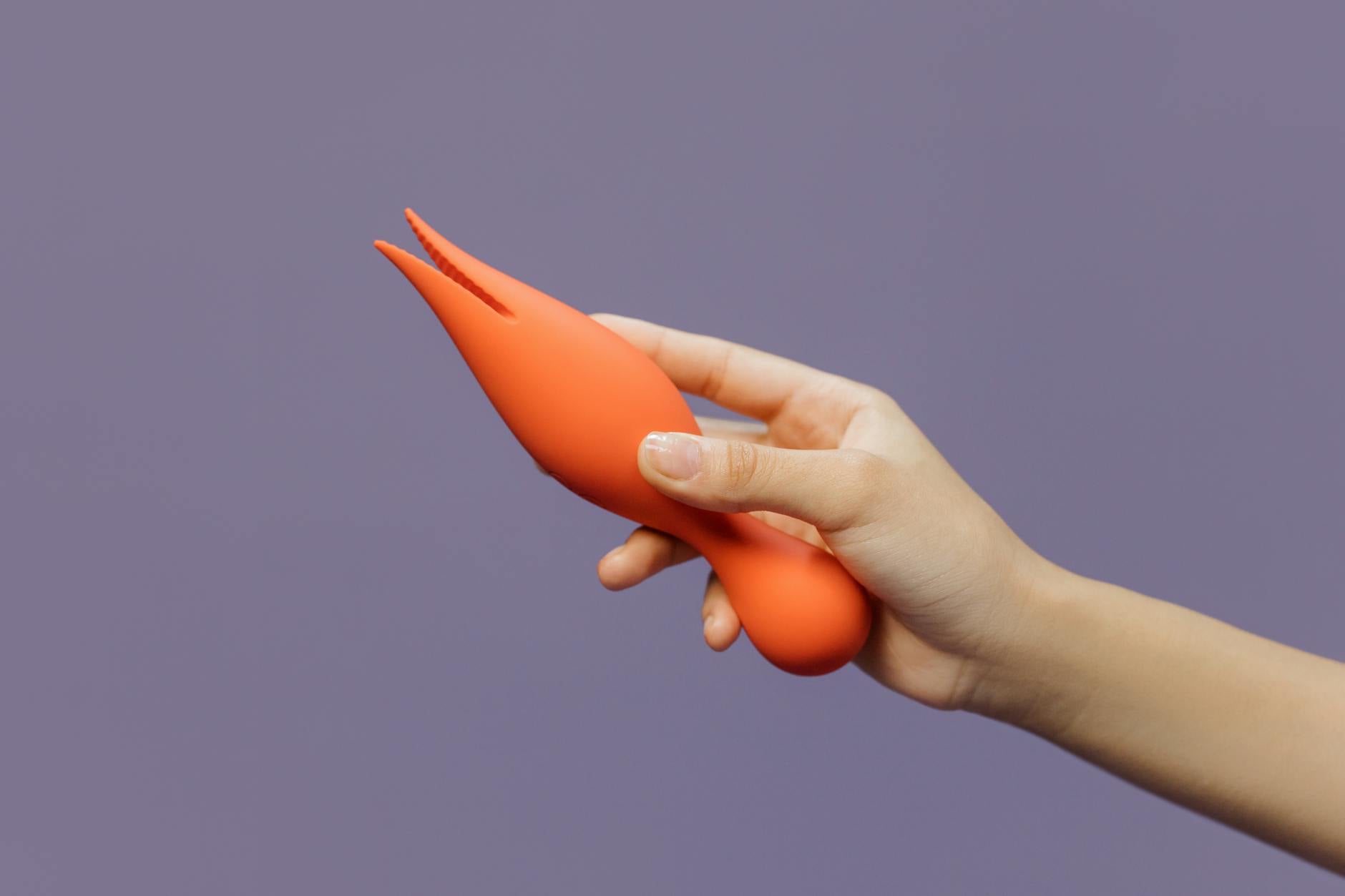
Photo by cottonbro studio on Pexels
What to actually say (word for word)
If you're still stuck on the opening, here are three versions. Pick one that feels closest to your voice and adapt it.
Version 1 (straightforward): "I've been curious about trying a lemon vibrator. I think it could feel really good for me. How would you feel about me exploring that?"
Version 2 (collaborative): "I read about lemon clitoral vibrators and I'm genuinely interested. Would you be open to learning about them together, or would you rather I figure it out on my own first?"
Version 3 (playful): "Okay, so I have a random idea. I want to try a lemon sucker vibrator. I know that might sound out of nowhere, but I'd feel better if we talked about it. Are you in?"
None of these is a request for permission. All three are invitations to be part of the conversation. The difference is subtle but it changes everything.
When your partner says yes, what happens next
First: celebrate internally. They said yes. That's the hardest part done.
Second: actually follow through. Don't buy something and then leave it in a drawer for two years. Set a timeline. "I'm going to order one this week" or "Let's pick one out together this weekend." Make it real.
Third: talk about how you'll use it. Will you start with solo exploration? Will you incorporate it the next time you're together? Will you show them what feels good? This isn't a script. It's just clarity so you're both on the same page.
When you actually use a lemon vibrator with your partner, some of that early awkwardness will probably still surface. That's normal. Sex is inherently a little awkward when something new enters the room. The difference is you've already had the hard conversation. The awkwardness is just logistics now, not fear.
When your partner says no (or "not yet")
This matters too. If they're not ready, the worst thing you can do is push. The second worst is pretend you weren't disappointed.
You can say: "Okay, I hear that. I'm curious what's making you hesitant. Is it something about the toy itself, or is it something about the idea of changing things?" Listen without arguing. Sometimes people need time. Sometimes they need to see that you're not going to think less of them for saying no.
You can use lemon vibrators solo. You can explore without them. And sometimes, once they see you enjoying it without pressure or resentment, they get curious on their own. That's actually one of the most common paths.
The thing nobody talks about
Introducing a lemon clitoral vibrator to your partnership is not actually about the toy. It's about whether you can ask for what you want and have your partner hear it as love instead of criticism.
If you can have this conversation well, you can have harder ones. If you can't, this conversation will expose that problem, which is also useful information. Either way, you're moving forward.
Most couples who introduce lemon vibrators together report the same thing: it wasn't as awkward as they'd built it up to be. The anticipation was worse than the reality. And once they got past the first time, the second time was easier. The third time, it was just part of their toolkit.
You deserve pleasure. Your partner deserves to know what you want. And the conversation between those two things is just talking. You've done harder things.
People also ask
How do I bring up lemon vibrators if I've never talked about sex toys before?
Start smaller. "I've been thinking about my own pleasure more" is an easier opening than "I want to buy a toy." Once they know you're thinking about sex toys exist, introducing a specific one feels less like a plot twist. You can also frame it around education: "I read this article about clitoral vibrators and I'm curious." That makes it about learning, not demand.
What if my partner thinks lemon vibrators mean I'm not satisfied with them?
That fear is real for them, so acknowledge it directly. "I love what we do together. This isn't about you being enough. It's about me exploring what else feels good." For some people, seeing you enjoy a toy actually makes them less anxious, not more. It takes pressure off them to be your only source of pleasure.
Can I use lemon adult toys during sex with my partner?
Absolutely. Some couples find it's easier to introduce during partnered sex, where you're already in an intimate space. Others prefer solo exploration first. There's no rule. The key is you've already talked about it, so you're both expecting it.
What if my partner wants to use a lemon sucker on me but I'm nervous?
Give feedback. "A little softer" or "Hold it there" or "I like that rhythm." This is collaboration. They don't know your body the way you do. And honestly, having someone else operate a lemon vibrator can feel completely different than doing it yourself. That's information worth gathering.
How do I know if a lemon clitoral vibrator is right for us?
There isn't one "right" toy. The Lem is a popular choice because the suction pattern works well for a lot of people, but you might prefer something different. Read reviews. Watch videos. Ask what appeals to you: suction versus vibration, quiet versus powerful, solo versus partnered friendly. Talk about it with your partner. You're not choosing forever. You're choosing a first experiment.
Is it weird to introduce lemon vibrators if we've been together for years?
Not at all. Sometimes couples introduce toys after decades together. The longer you've been together, the more you might actually benefit from shaking things up. You're not trying to fix something broken. You're trying to refresh something that matters to both of you.