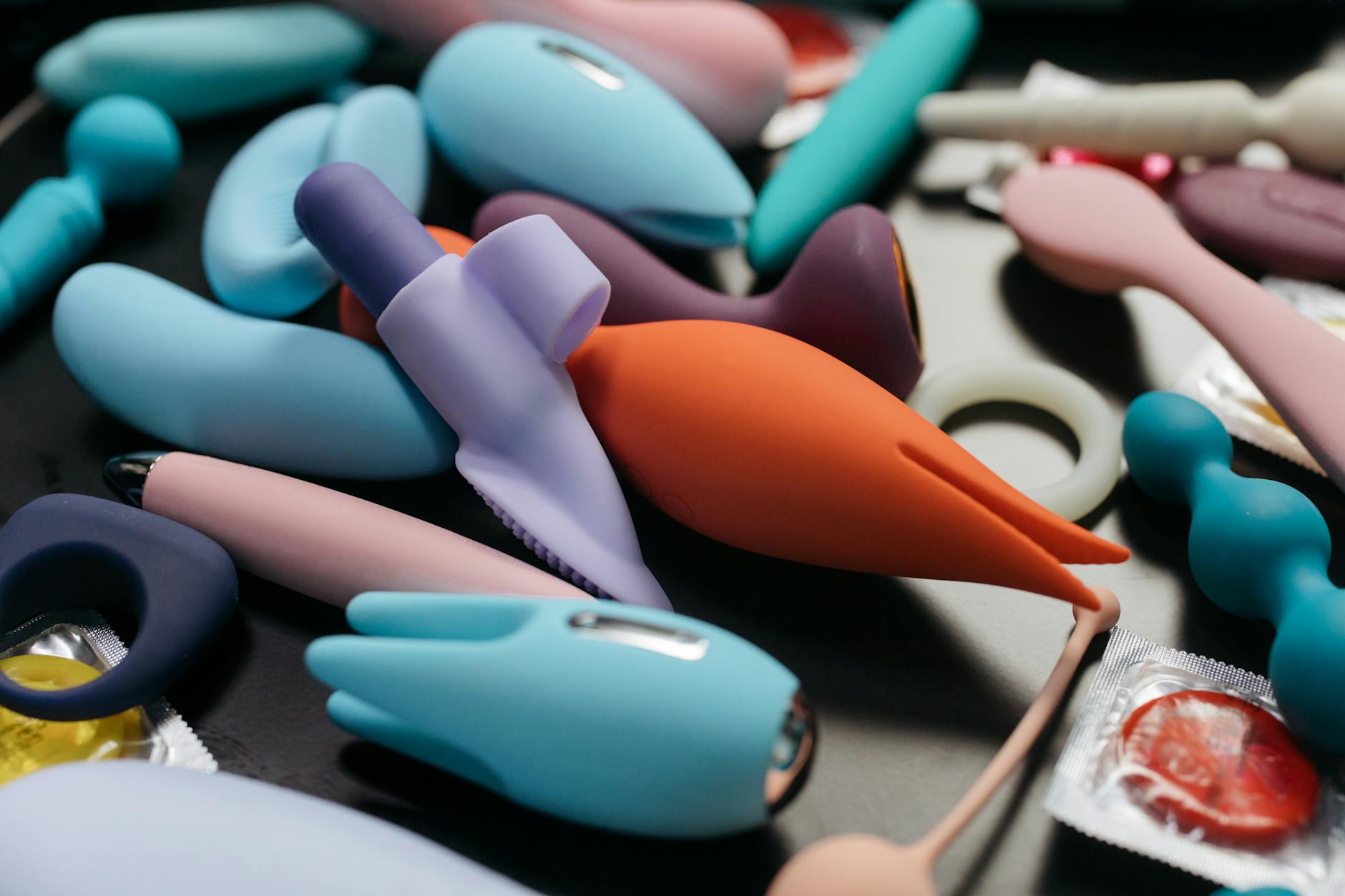
Here's the thing about blocked conversations
Most couples don't avoid talking about pleasure because they don't care. They avoid it because they've already tried, it went sideways, and now there's this weight around the topic that makes it harder to broach. One person feels rejected. The other feels pressured. Someone said something that landed wrong, and now asking feels risky.
A lemon vibrator isn't a therapist, but it can be the conversation starter that therapy recommends.
Why this particular tool works as a bridge
Lemon clitoral vibrators like the Lem shift the dynamic because they're not about what's "wrong" with your sex life. They're about adding something new. That distinction matters enormously. The difference between "I want us to try this" and "I'm not satisfied" is the difference between expansion and critique.
When communication feels stuck, a concrete object gives you something to point at, laugh about, research together, or play with without the pressure of having to perform the conversation perfectly. You're not defending your desires. You're literally holding something external to discuss.
Second, lemon vibrators are non-threatening to partners who worry about being "replaced." They're designed for solo or partnered use. A clitoral suction device doesn't compete with penetration or hand contact. It complements them. That removes one major source of defensiveness that blocks conversations before they start.
The setup conversation (the one before the product conversation)
Let's be clear: you can't introduce a lemon vibrator effectively while you're still in a conversation about your sex life feeling flat or one-sided. That's fighting two battles at once.
Instead, pick a calm moment outside the bedroom. Not during sex. Not right after rejection. Not when either of you is tired or stressed. Literally any other time.
Your opening: "Hey, I've been thinking about something, and I want to bring it up differently than I have before. Not like something's wrong. Just that I'm curious about something, and I'd like to explore it with you."
That's it. You're signaling three things at once. One, this isn't criticism. Two, you're bringing it to them as a partner, not dumping it as a complaint. Three, you're asking them to explore, not demanding they participate.
If they seem open, you continue. If they seem defensive, that's real information. They may need reassurance before you even mention the product. That conversation might sound like: "I'm not saying anything's missing. I just want us to have fun and try new things together." Let that sit. You don't rush to the product when trust is shaky.
Introducing the tool itself
You have options here. Some couples research it together on the Viral Lem website. Some watch a review. Some one person brings it home and shows it like you'd show a new kitchen gadget.
What usually doesn't work: leaving it on the bed as a surprise or springing it on them mid-sex. That feels ambushing, not collaborative.
What usually does work: "I found this thing. It's designed for clitoral stimulation, and people seem to love it. I'm curious to try it. Want to check it out together?"
If your partner seems hesitant, ask what worries them. Often it's one of three things: "Does this mean you're not satisfied with me?" (No. This is addition, not subtraction.) "Will it hurt?" (No, show them how it works.) "Do I have to use it?" (Only if you want to. This is for both of us to enjoy.)
You're not convincing them. You're answering their actual concerns.
The physical introduction
Here's where most couples skip important steps. You don't plug in a new lemon vibrator and jump straight to partnered use. That's like inviting someone over and handing them the car keys before they've sat in the driver's seat.
Instead: one of you explores it solo first. This removes performance pressure. You're learning how it feels, what patterns you like, where the sweet spot is. Your partner can watch or leave the room. Either is fine. But they're not expected to react or perform.
Then, when you bring it into partnered time, it's not a mystery object you're both figuring out for the first time. You can say, "I like it when it's on this pattern" or "Let's try it while we're kissing." You've done the homework.
A lemon clitoral vibrator works particularly well here because suction-based stimulation tends to feel gentler and more diffuse than direct vibration. If you or your partner have anxiety about intense sensation, starting with a lower intensity setting on a device like this removes another barrier.
Weaving it into your actual sex life
Once you've both had some individual experience, integration is usually straightforward. The conversations that come next are practical: "Does this feel good?" "Want me to keep going?" "Should we try a different pattern?"
Those are easy conversations because they're about sensation, not emotion. And they're scaffolded. You've already said the hard part: "I want to explore this together."
Some couples use lemon vibrators for solo play sometimes and partnered play other times. Some use them during certain parts of foreplay and not others. Some discover their partner loves using it on them. The point is flexibility. You're building a vocabulary of options, not replacing what was already working.
If you're dealing with something like delayed arousal, a lemon sucker actually reduces the time pressure that kills communication. Instead of both partners getting frustrated that arousal is slow, you have a tool that helps it along. That's less resentment to navigate conversationally.
When the conversation still stalls
Sometimes you do all this and your partner still shuts down. That's not a product problem. That's often a deeper relationship thing, and it might mean you need actual couple's counseling, not a vibrator.
But here's what a lemon vibrator does give you in that scenario: it's a concrete starting point for a therapist or counselor. You can say, "I wanted to introduce this, and my partner wasn't interested. We haven't been able to talk about why." A good therapist will dig into the real blocks, which are usually about trust, desire mismatch, or old relationship patterns, not about the toy itself.
The longer conversation it opens
When communication about pleasure unfreezes, other conversations often get easier too. You might find yourselves talking about what you actually want, what you've been too shy to ask for, or what you're both curious about. That's the real win.
A clitoral vibrator is just the opening. The substance is the dialogue.
FAQ
Can I use a lemon vibrator without having the conversation first?
You can, but it often backfires. If your partner hasn't agreed to it or doesn't understand why it's there, it can feel like a unilateral decision about shared intimacy. Start with words. The toy follows.
What if my partner thinks I'm implying they're not enough?
That's usually a reaction rooted in insecurity, not reality. Address it directly: "This isn't about you. It's about me wanting to feel more pleasure, and I want you there with me." Reassurance matters more than the product here.
Should we both use it, or is it just for one of us?
Both is fine. One of you is also fine. Some people enjoy using it on a partner. Some don't want to touch it. There's no "should." You figure out what feels good.
How do I bring this up if we haven't had sex in a while?
That's actually easier in some ways because there's no current sex life to defend. You're proposing a restart, not an critique of what already exists. Frame it as curiosity about exploring together, not about fixing a problem.
What if my partner wants to use it but I don't?
That's completely valid. You can be enthusiastic about their pleasure without participating in every part of it. "I love watching you enjoy yourself" is enough.
Will this actually fix our communication problems?
No. But it can unfreeze them. Real relationship repair takes time, honesty, and usually professional help. A lemon vibrator is a catalyst, not a cure.
The actual payoff
I've watched couples restart their entire intimate lives because one person finally said, "I want to try something," and the other person said, "Okay." That conversation took about ninety seconds. What followed was months of easier dialogue and rediscovery.
Your partner probably wants you to feel good too. They may just be waiting for permission to say so. A clitoral vibrator gives you both permission. And that's worth the small awkwardness of the asking.