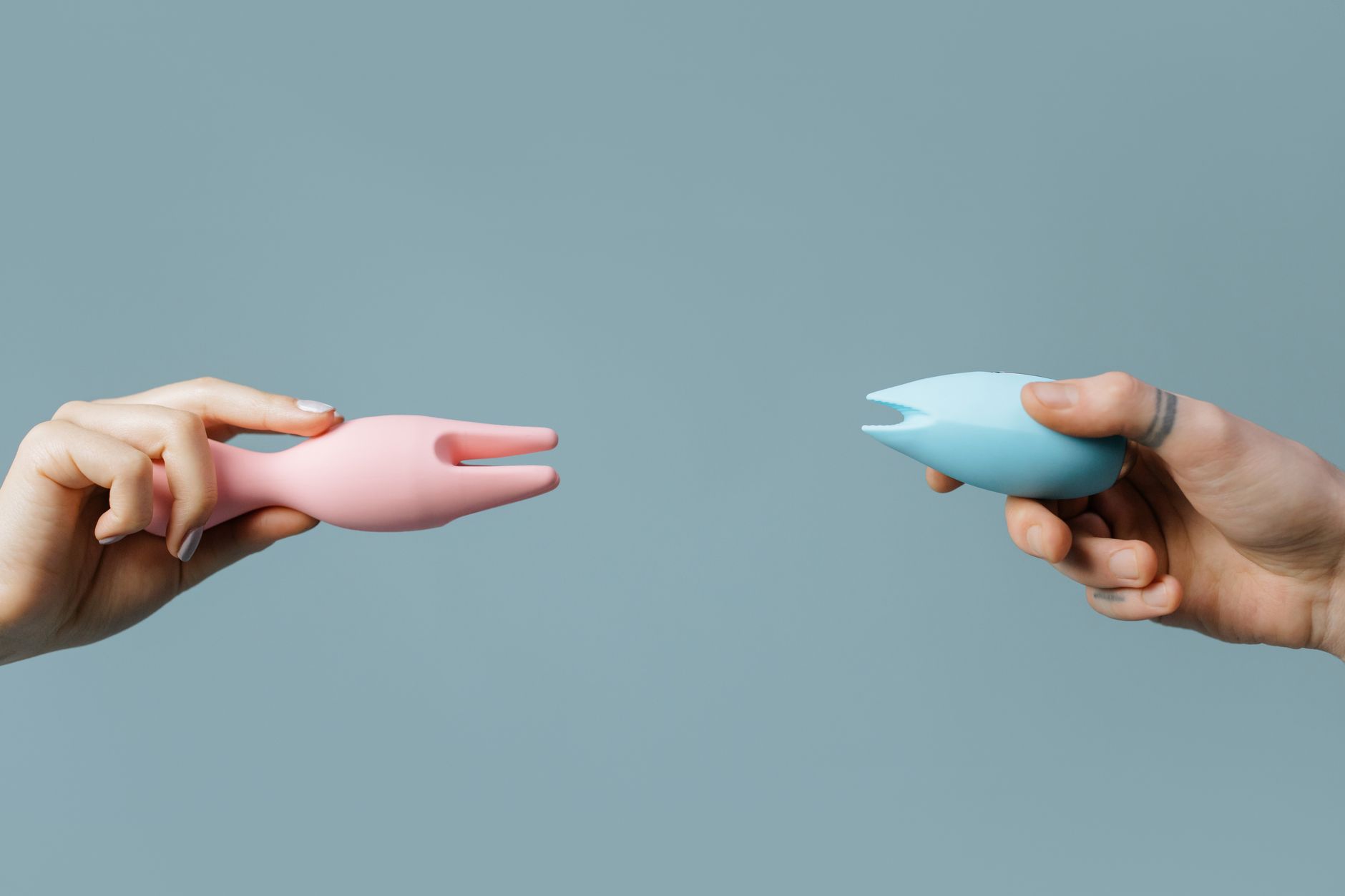
Here's what nobody tells you about introducing toys to a partner
Most conversations about lemon vibrators and couples start with shame. Someone googles it alone at 11 p.m., worrying that wanting this thing means something's wrong with the relationship. Or they're afraid their partner will feel replaced, inadequate, or judged. Both fears are totally legitimate. And both are based on the same misunderstanding: that a clitoral vibrator is a comment on what's missing, when it's usually an invitation to what's possible.
I've worked with hundreds of couples, and the ones who integrate vibrators successfully aren't doing anything magical. They're just being direct, specific, and honest about why. That's the whole thing.
The conversation nobody wants to have
Let's start with the hardest part: actually saying it out loud. Most people try to soften it into oblivion. "Maybe sometime we could, like, if you wanted, kind of... explore together?" That's not a conversation. That's a mumble, and it leaves room for your partner to mishear, deflect, or get defensive.
Here's what actually works: clarity without apology. Pick a moment that's not during sex, not right before bed, and not in the middle of conflict. A regular Tuesday conversation, sitting down with coffee or tea, is infinitely better than a whisper in the dark.
Try this frame: "I've been thinking about trying a lemon clitoral vibrator together. I think it could feel amazing for me, and I'd like to explore that with you. I want to know what you think, and I'm also hoping you'll tell me what you're worried about."
Notice what's in there. You're naming the specific thing (not "something"), explaining why you want it (sensation, not dissatisfaction), saying you want to do it together, and opening the door for their real feelings. You're also not asking permission. You're inviting partnership.
Your partner might say yes immediately. They might say no. They might say "I don't know, tell me more." All of those are starting points. What you're listening for is the actual worry underneath, not just the first answer.
What your partner is actually afraid of
The fear isn't usually about the toy itself. It's one of three things.
"Will I be replaced?" This one shows up as "Don't you want me to be enough?" or sometimes just silence and withdrawal. The real anxiety is that pleasure with a toy means you'd prefer the toy over them. It doesn't. What it means is that you have a clitoris with 8,000 nerve endings in a concentrated spot, and sometimes that spot responds to suction and vibration in ways that hands alone can't match. That's physiology, not infidelity.
The antidote is involvement. If your partner feels like they're part of using the lemon vibrator, not watching from the sidelines, the replaced feeling evaporates. You'll get to that part soon.
"Is my body not enough?" This one's sneakier because it often sounds like enthusiasm masking insecurity. They might say "Yes, let's try it!" and then go quiet during, or not want to use it again. Usually what's happening is they're feeling judged. The fix here is explicit reassurance and specificity about why you want this. "I love how your hands feel on me. I also want to try this vibrator because sometimes I want stimulation that my body responds to differently. It's not instead of you. It's an addition." Then follow through. Use it together. Make it obviously collaborative.
"What does this mean about our sex life?" If your partner is asking this, they might be picking up on something real. Sometimes a person reaches for a lemon vibrator because the sex life has actually gone stale, and the toy is the Band-Aid instead of the conversation. If that's you, the toy talk is the wrong conversation first. You need to talk about what's shifted between you. But if your sex life is fine and you just want to add something, say that clearly.
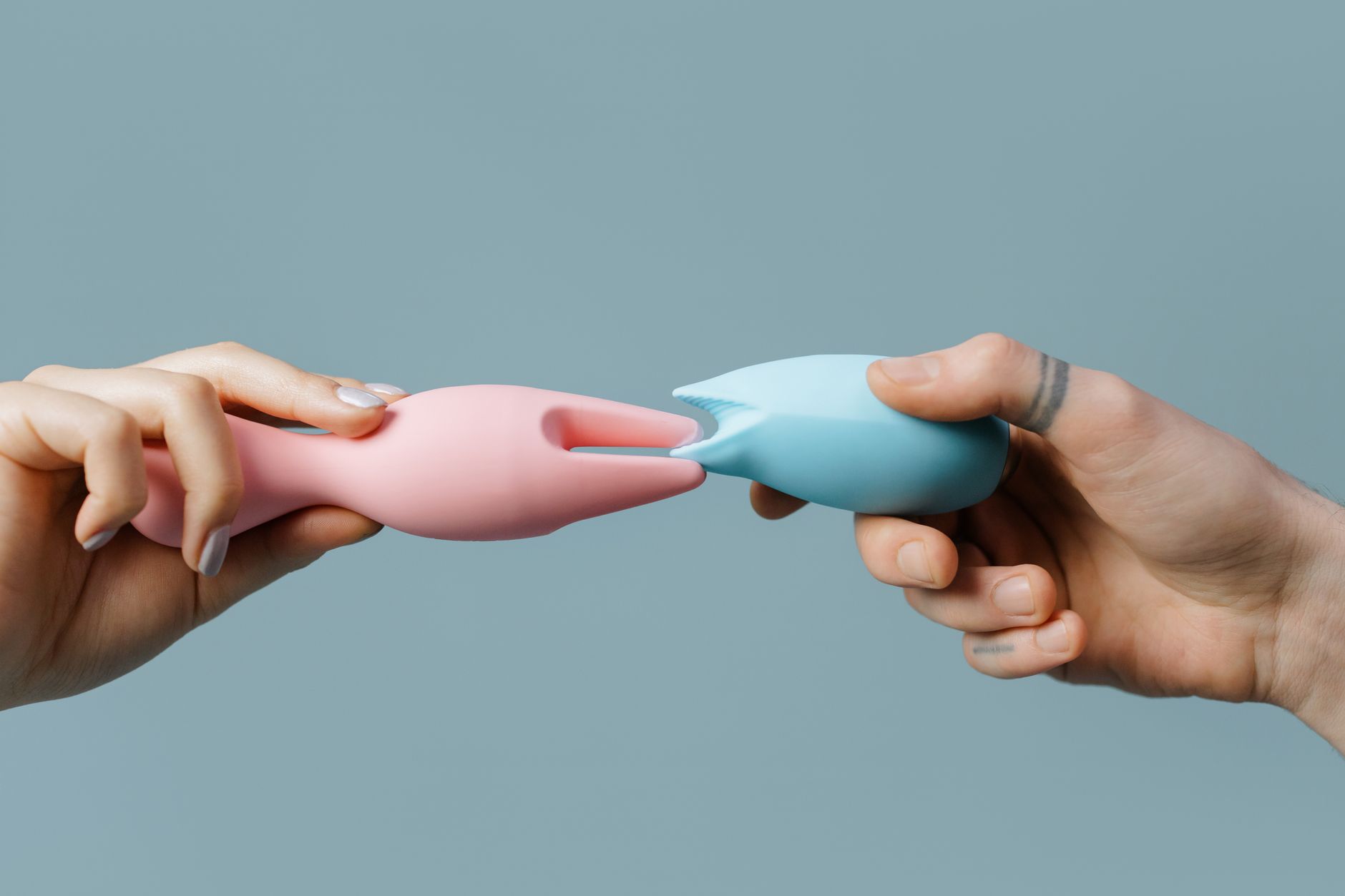
Photo by cottonbro studio on Pexels
The timing that actually matters
A lot of couples try to introduce a lemon clitoral vibrator mid-sex, assuming that sexual momentum is the best time. It usually isn't. Here's why: if something doesn't feel right or your partner's discomfort shows up, you're stuck in a vulnerable moment with nowhere to pause gracefully.
Instead, plan a first use the same way you'd plan trying something new in the kitchen. Not every day, not casually, intentionally. Pick an evening where you both have time, you're not tired, and you're not rushing anywhere after. Show your partner the vibrator before you're in bed. Let them hold it, look at it, ask questions. Demystification kills nervousness.
When you're ready to use it, start solo while your partner watches, or have them hold it. Don't do anything more complicated than demonstrating how it works. The goal is just to remove the strangeness. After a few times of casual introduction, integrating it into partnered sex feels natural because it's not weird anymore.
How to actually use a lemon vibrator with your partner
Once the awkwardness has worn off, the mechanics are straightforward. Here are three starting configurations that work:
Your partner uses it on you. They hold the lemon vibrator while you're together. This keeps them actively involved. They control the pressure, speed, and timing. You're communicating in real time about what feels good. This is the most common first step because it maintains connection and gives them agency.
You use it on yourself while connected. If you're penetrating or your partner's inside you, using a lemon clitoral vibrator on yourself during that time creates sensation for both of you. Your pleasure intensifies, they feel you respond, and it's not a separate activity. As a clitoral vibrator, the lemon design gives you precise stimulation without taking up much space.
Switching off. Some couples explore using vibrators on each other in non-penetrative ways, or take turns. If your partner has a vulva too, introducing a vibrator becomes a mutual thing. If they don't, you might explore whether they want any stimulation while you're using the toy. No pressure either way.
The rule for all three: check in. "How does this feel?" "Do you want more or less?" "What would feel good right now?" Sexy communication is underrated, and it's the antidote to awkwardness.
When a lemon vibrator actually fixes a disconnect
Here's something that sounds counterintuitive: sometimes a clitoral vibrator brings couples closer because it removes pressure. If you've been struggling to orgasm, your partner might've been taking it personally or feeling responsible for "fixing" you. When the lemon vibrator helps you come more easily, it takes that weight off. You're not performing. They're not failing. You're both just experiencing pleasure together.
That shift often ripples outward. Sex feels less like a task and more like play. Intimacy outside the bedroom improves because nobody's carrying resentment. This is why I often recommend couples introduce vibrators not as a last resort, but as a curiosity. Just something new to try.
What to do if your partner says no
If you bring this up and your partner genuinely doesn't want to use a lemon vibrator, that's information. It's not a dealbreaker unless you make it one. What matters is understanding why.
If it's about feeling inadequate, you can work on that separately through conversations or therapy. If it's about values or comfort, you get to decide whether that's negotiable for you. If it's just not their thing, that's valid too. You can still use a lemon clitoral vibrator on your own time. Your pleasure doesn't require their participation.
But most couples who start this conversation actually find middle ground. They might not use a vibrator constantly, but they're open to trying. And that openness itself is a form of intimacy.
The first time actually works better than you think
You've had the conversation. You've shown them the vibrator. You're in bed, you're connected, you're ready. Here's what usually happens: it feels good. Surprisingly good. Your arousal shifts. Your body responds differently. Your partner watches you respond, and that turns them on. The weird thing becomes the fun thing. In about fifteen minutes, you'll both be wondering why you didn't try this sooner.
That's the real pattern. The anxiety lives entirely in anticipation. The actual experience is almost always less fraught and more pleasurable than either of you expected. So take the conversation seriously. Be honest. Use the tool. And then just be there together.
FAQ: Using lemon vibrators with your partner
Will a clitoral vibrator make my partner feel like they're not enough?
Not if you've had an actual conversation about it. Vibrators feel different than hands or mouths. They're not better or worse. They're just different. When your partner understands that you're exploring sensation, not comparing them, the insecurity usually dissolves. Involvement helps too. If they're using the lemon vibrator on you, they're directly part of your pleasure.
How do I bring this up without sounding like I'm unhappy with our sex life?
Start by being direct about that exact thing. "I want to be clear: I'm happy with us. I'm also curious about exploring this." Curiosity and contentment aren't opposites. You can be satisfied with your relationship and still want to try new things. Same way you can love the restaurant you go to every week and still want to try a new place sometimes. The conversation matters more than the script. Your tone should match what you mean: genuine, not apologetic.
What if I'm embarrassed to show my partner my new lemon vibrator?
That's normal. You're about to be vulnerable about something intimate. The embarrassment usually fades once you've actually shown it to them. Make it less abstract by handling it yourself first, maybe even using it alone a few times. Then showing your partner feels less like introducing a foreign object and more like sharing something you like. The embarrassment is front-loaded. After you've said it out loud once, it gets easier.
Should we use a lemon vibrator every time we have sex?
No. If you did, it would lose the fun novelty and might actually become pressure. Use it when you want to, not as a requirement. Some people use a clitoral vibrator occasionally. Others use it every time. There's no right frequency. It's whatever feels sustainable and pleasurable for both of you.
What if my partner wants to use a vibrator but I'm not interested?
That's a conversation too. You get to have boundaries. You also get to be curious about why they want it. Is it because they want to explore sensation? Because they've seen it recommended online? Because they're stressed and want a shortcut to pleasure? All of those are different. Your answer might shift depending on the reason. If you're genuinely not interested, that's okay. But it's worth exploring whether there's a version of this that works for you both.
Can we use a lemon vibrator if we're just starting to date?
Yes, but the earlier in the relationship, the more directness matters. New couples are already vulnerable. A vibrator conversation can feel like a lot if you've only been together a few weeks. That said, some people bring it up early because they know what they like. The key is reading your partner. Do they seem open to conversations about sex? Have you already talked about pleasure? If yes to both, go for it. If no, maybe wait until you have more rapport.
Moving forward
Lemon vibrators work in relationships because they're a tool for pleasure and exploration, not a replacement for your partner. They're also a reminder that you deserve to prioritize your own sensation. The most successful couples I've worked with aren't afraid to try things. They're just thoughtful about how they introduce them. Have the real conversation. Check in honestly. Then enjoy what comes next.
If you're ready to explore, Viral Lem's clitoral vibrator options like the Lem are designed for precision and responsiveness. But first, make sure you and your partner are on the same page. That's always the real device.