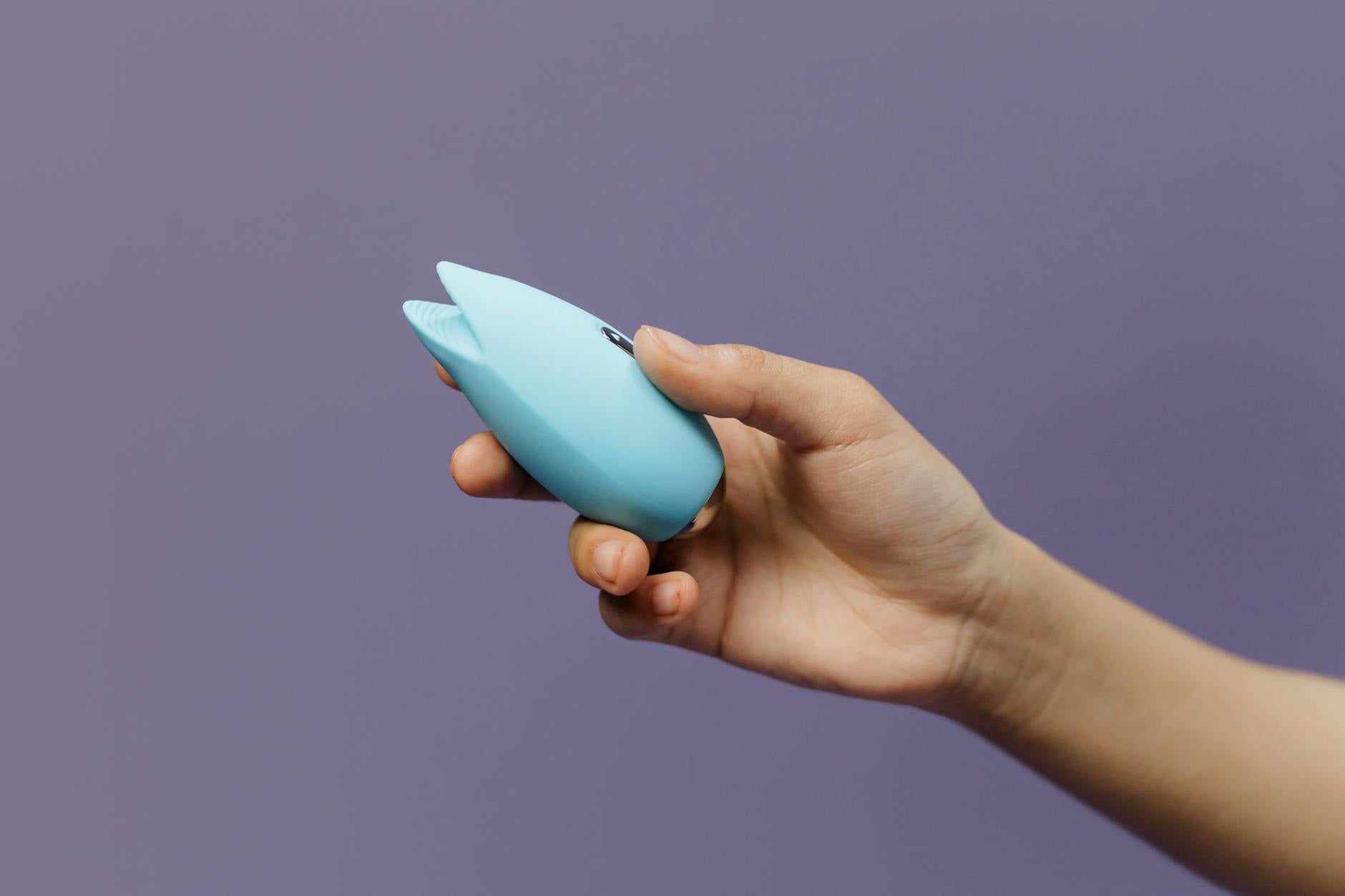
Your clitoris is not what you learned in high school
Honestly, most of us had the same sex ed experience. A tiny dot on a diagram. Maybe "sensitive." That's it. The reality is wildly different, and understanding the actual anatomy changes everything about how you experience pleasure with tools like air suction lemon vibrators.
Here's what's really going on down there, and why it matters for how you orgasm.
The clitoris is way bigger than you think
That small bump you see is just the tip. The clitoris is an organ that extends internally in a wishbone shape, with bulbs that sit alongside your vaginal opening and even wrap around to your perineum. The visible part is the glans. The internal part is the body and crura. Together, they create a network of nerves that rivals the penis in density and sensitivity.
The clitoral glans alone has around 8,000 nerve endings. That's more nerve density than your fingertips. When you stimulate that area, you're not just activating surface nerves. You're triggering a cascade of sensation that can extend through the entire internal structure.
This is why different types of stimulation feel so different. A lemon vibrator doesn't work the same way a traditional vibrator does because it's not using friction or direct vibration. It's using air suction and rhythmic pressure to gently draw tissues and nerve endings upward. For many people, especially those with sensitive vulvas, this feels dramatically better.
Why air suction reaches parts of your anatomy traditional vibrators can't
There's a reason clitoral suction has become a game-changer in the last decade. It works because of how your vulva actually responds to stimulation.
When you use a traditional vibrator, you're relying on mechanical vibration against the surface of the glans. This works, sure, but it requires a certain amount of direct pressure and friction. For people with sensitive skin, nerve hypersensitivity, or thinner tissue (whether from age, hormones, or just genetics), that pressure can actually hurt or feel overwhelming.
Air suction tools like the Lem work differently. Instead of vibrating against the tissue, they create a gentle negative pressure that draws the tissue into the cup. This stimulates the nerve endings without requiring direct contact or pressure. Think of it less like a buzzing sensation and more like a gentle, rhythmic pulling feeling.
This approach activates not just the surface nerves but also the deeper tissues of the clitoral body. Because the internal portions of the clitoris surround the vaginal opening, that suction movement can create sensations that feel entirely different from traditional vibration. Many people describe it as deeper, more whole-body, or more building.
The four types of nerve endings in your vulva and what they feel
Your vulva contains different types of sensory receptors, each tuned to different types of stimulus.
Pacinian corpuscles respond to pressure and vibration. These are the ones buzzing traditional toys activate. They're great, but they tire easily. This is why people often need to increase vibration intensity over time.
Meissner's corpuscles respond to light touch and gentle stroking. These are active at lower intensities and are often the first to get overwhelmed in high-intensity stimulation.
Merkel cells sense sustained pressure and texture. Air suction toys engage these because the sensation builds and holds rather than vibrating.
Nociceptors are pain receptors. With sensitive vulvas, intense vibration can accidentally trigger these instead of pleasure.
A lemon clitoral vibrator, because it uses suction rather than direct vibration, tends to activate Merkel cells and Pacinian corpuscles in a gentler rhythm. This creates a more layered sensation that builds gradually instead of overwhelming the nerve endings.
Why your clitoral sensitivity is actually normal (even if it feels weird)
Some people avoid toys entirely because their clitoris feels too sensitive to touch. Others can barely feel anything even with high-intensity stimulation. Both are normal variations in vulva anatomy and neurology.
Clitoral sensitivity depends partly on the thickness of the tissue covering the glans, partly on your natural nerve density, and partly on hormones. During different phases of your cycle, pregnancy, or menopause, that sensitivity shifts. The glans can become more exposed and sensitive, or more protected and numb, depending on hormone levels.
This is where air suction toys shine. Because they don't require direct contact, people with highly sensitive glans can use them comfortably. And because the sensation builds gradually through suction rather than hitting you with vibration intensity right away, you can find a rhythm that works instead of jumping straight to overwhelm.
If you've struggled with <a href="/blog/lemon-vibrator-first-time-sensitivity-concerns">lemon vibrator sensitivity concerns</a>, this is why. Your body isn't broken. You just needed the right type of stimulation.
How internal clitoral structure changes what you feel
Remember that wishbone shape I mentioned? Where those internal bulbs sit matters. Some people's clitoral bulbs sit closer to the surface, closer to the vaginal opening. Others have them positioned deeper or further back. This variation in anatomy changes everything about which types of stimulation feel best.
If your clitoral bulbs sit close to the vaginal opening, direct penetration with a partner or toy can stimulate them indirectly. Suction toys that activate the whole clitoral structure might feel more diffuse. If your bulbs sit deeper, you might feel suction more intensely because it's creating pressure in the space where those internal structures live.
This is partly why some people have lightning-fast orgasms with air suction toys while others need longer warm-up time. It's not about broken anatomy or low desire. It's about how your specific body is wired.
Hormones, tissue thickness, and how they change your vulva sensitivity
Your clitoris is exquisitely sensitive to hormones. Estrogen keeps the tissue around the glans plump and protected. It also maintains blood flow to the area, which affects nerve sensitivity. When estrogen drops, even slightly, that tissue gets thinner and the glans becomes more exposed.
This is partly why <a href="/blog/how-to-use-lemon-vibrator-during-menopause-safely-and-comfortably">lemon vibrators help with menopause comfort</a>. Traditional vibrators can feel too intense or even painful when tissue is thin. Air suction, because it doesn't require pressure, feels gentler.
Testosterone, which everyone produces but in different amounts, also drives clitoral sensitivity. Higher testosterone often means a larger clitoral glans and more responsive nerve endings. This is one reason testosterone therapy can be transformative for people who've lost desire or sensation.
Understanding this means you can adjust your approach as your body changes. What worked at 25 might need tweaking at 45 or 55. That's not failure. That's biology.
Building sensation gradually with air suction tools
Because air suction works differently than vibration, the way you build pleasure is different too. Instead of turning intensity up, you're typically adjusting the suction strength or the pattern.
Start with low suction on the Lem or similar lemon clitoral vibrator. Let that gentle pulling sensation activate your nerve endings without forcing them. You'll probably feel a subtle build. That's not weak. That's your body tuning in.
Over 3 to 5 minutes, increase the suction level gradually. Your nerves will respond better to slow buildup than to shock. This approach also trains your body to stay present instead of chasing harder sensation.
Many people find that this slower build actually creates stronger, longer orgasms than jumping straight to maximum intensity. Your whole vulva has time to respond, not just the surface nerves.
Why understanding anatomy matters for pleasure and confidence
Here's the truth nobody tells you: knowing how your body actually works is permission to stop trying to make yourself work like someone else's body.
Your vulva anatomy is unique. The size and position of your clitoris, the thickness of your tissue, your nerve density, your hormone balance right now, whether you're in a cycle or menopause or somewhere in between. All of it is you. Not better or worse than anyone else. Just yours.
When you understand that <a href="/blog/why-lemon-vibrators-work-better-for-sensitive-vulvas-than-traditional-vibrators">lemon vibrators work better for sensitive vulvas</a> because of how they interact with your actual tissue and nerve structure, you stop wondering if something's wrong with you. Something's just different. And different, when you have the right tools and knowledge, is often better.
Take time to explore what feels good. Warm up longer than you think necessary. Use lube even if you don't think you need it. The tissue that absorbs sensation responds better when it's lubricated and well-supplied with blood. A toy designed around how your body actually works, like air suction design, does the heavy lifting.
FAQ: Vulva Anatomy and Lemon Vibrator Sensation
Why does my clitoris feel numb sometimes?
Numbing usually comes from one of a few sources: temporary nerve fatigue from intense stimulation, hormonal shifts that thin the protective tissue around your glans, or simply the natural variation in sensation throughout your cycle or week. If you've been using high-intensity vibration regularly, your Pacinian corpuscles (the vibration-sensing nerves) fatigue and need recovery time. Switching to air suction for a week or two often restores sensation. If numbness persists, check in with a gynecologist who understands sexual health.
Can your clitoris actually get desensitized permanently?
No, but it can get temporarily tired. Think of it like a muscle that's been overworked. The nerve endings aren't damaged. They just need a break from constant high-intensity stimulation. Most people regain full sensation within a few days of using gentler tools or taking a break entirely. Air suction toys are actually great for recovery because they engage different nerve pathways than traditional vibration.
Does the size of your clitoris matter for pleasure?
Size alone doesn't determine pleasure, but it can affect the type of stimulation that works best. A larger clitoral glans typically has more surface area and might respond better to broader stimulation. A smaller glans might be more sensitive to concentrated pressure. Air suction toys work across this range because they engage the whole clitoral structure, not just the surface.
Why do some people orgasm faster with air suction than vibration?
Because air suction activates different nerve pathways and deeper tissues in the clitoral body. Instead of relying on rapid vibration to overwhelm the surface nerves, suction creates a building pressure that engages your whole clitoral structure. For some anatomy, this pathway to orgasm is actually more direct.
Can you feel more pleasure if you understand your vulva anatomy better?
Absolutely. When you know why certain stimulation works and others don't, you stop fighting your body and start working with it. You choose tools and techniques that match your actual nerve structure instead of chasing what worked for someone else. That confidence and alignment usually creates better sensation, faster arousal, and stronger orgasms.
Does tissue thickness change how air suction feels?
Yes. Thicker tissue creates more cushion between the suction cup and the deeper clitoral structures, so you might feel the sensation as more diffuse. Thinner tissue (from hormonal changes, age, or genetics) means the suction pulls closer to those deeper nerve endings, which can feel more intense. Neither is better. It just means you might adjust your starting suction level based on your current tissue state.