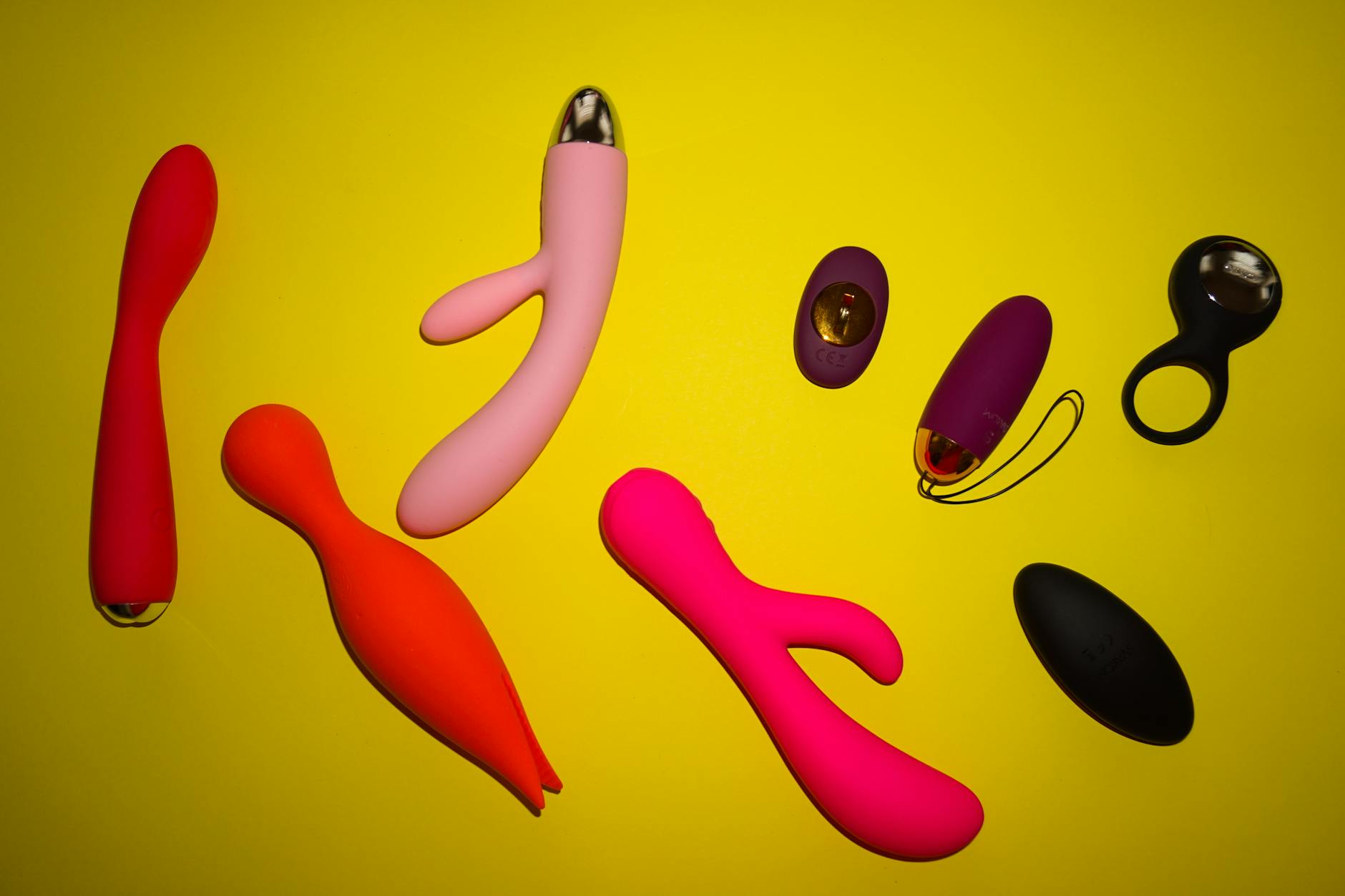
Let's talk about the performance trap
You bought a lemon vibrator. You're excited. You set aside time, get into position, turn it on. And then nothing happens. Or worse, something tightens in your body. Your mind starts narrating: "Why isn't this working? Should it be working by now? Did I waste money on this?" And just like that, you've locked yourself out of the experience.
This isn't a flaw in the toy. It's a flaw in how we've been trained to think about pleasure.
The goal-chasing brain kills sensation
Here's something neuroscience confirms: the brain cannot simultaneously chase an outcome and experience present sensation. These are literally different neural pathways. When you're outcome-focused, the prefrontal cortex (your logical, achievement-oriented brain) is running the show. When you're sensation-focused, the limbic system (your pleasure and emotion center) takes the lead.
Most of us spent our whole sexual lives in achievement mode. Early experiences often feel rushed or pressured. We learn to optimize for efficiency. Get turned on, get to the finish. Over years, that wires a deep expectation that pleasure should be linear, progressive, and fast.
Then someone hands you a lemon clitoral vibrator, and suddenly none of those rules apply. Suction-based stimulation doesn't work like traditional vibration. It builds slowly. It layers. It requires permission to feel things that don't look like "progress" on a graph.
What actually happens when you release the goal
I work with couples and individuals who've hit a wall with pleasure, and the pattern is always the same. The moment someone stops watching for the orgasm and starts noticing instead what sensation feels like right now, everything opens up.
Your body relaxes. Your pelvic floor softens. Your awareness narrows to the exact point of contact. Lemon vibrators shine here because suction creates a sustained, focused sensation that rewards attention rather than demanding intensity. You can feel the difference between pattern 1 and pattern 2 because you're actually listening to your body instead of listening for a deadline.
This is not settling. This is not "taking what you can get." This is the difference between looking at a painting and noticing every brushstroke versus glancing at it from a moving car.
The paradox: slower gets faster
Here's the weird part. When you genuinely let go of the outcome and sit with sensation, orgasms often come faster and feel stronger. Not because you're doing anything different physically. But because your nervous system is actually available for pleasure instead of locked in anticipation.
The clitoral nerve pathway has about 8,000 nerve endings. Lemon clitoral vibrators activate those nerves through sustained suction and pulse patterns. But if your brain is busy tracking "am I close yet," your body is rationing its response. Bandwidth is finite. You're splitting attention between sensation and expectation.
When you release that tracking function, your entire nervous system can drop into the experience. Your body stops protecting itself. Your pelvis tilts differently. Your breath deepens without you trying. And suddenly, a lemon vibrator that felt like nothing five minutes ago is creating waves of sensation.
How to actually do this
Okay, so intellectually you get it. But how do you flip the switch?
Start by reframing the session entirely. You're not having sex or masturbating with a goal. You're running an experiment on what sensation feels like. No pass or fail. You're literally just gathering data.
Sit down with your lemon vibrator with a clear head. Not rushed, not after a stressful day if you can help it. Start at the lowest setting. Place it where you're curious. Wait 30 seconds before doing anything else. Just feel.
Notice: Is it pleasant? Neutral? Does it build or stay the same? Does your pelvic floor tighten or relax?
Move to the next pattern. Wait again. Keep noticing without judging. You're building a sensory map, not checking boxes.
If you find yourself thinking "this should feel like X by now," notice that thought like a cloud passing. Name it: "There's the expectation voice." Then return to sensation. What's actually happening right now, in this second?
This skill takes practice. Your brain has been optimizing for outcomes for years. It wants to goal-seek. That's its job. But you can train it to shift modes.
What changes when partners are involved
If you're using a lemon vibrator with a partner, the pressure can feel even heavier. There's often an implicit expectation that bringing a toy means faster or better results. Now both of you are watching the clock.
The fix is explicit communication. Tell your partner: "I'm experimenting with this. I'm not trying to get to any specific place. I'm just noticing what feels good." That single sentence shifts the entire energy. They can relax out of performance mode. You can relax out of producing results.
A good partner gets curious instead of goal-focused. They might ask what sensation you're experiencing rather than whether it's working. That distinction sounds small. It's everything.
Why lemon vibrators specifically reward this shift
Traditional vibrators create a faster escalation. Higher intensity, more aggressive patterns. They're built for the outcome-focused nervous system. They want momentum.
Lemon vibrators and air suction technology work differently. The sensation is continuous but nuanced. Patterns layer. Intensity builds from gentleness rather than starting aggressive. This design naturally invites a different relationship with your body. It's harder to rush a lemon vibrator. It's more forgiving when you slow down.
This is why so many people say that a lemon clitoral vibrator changed what pleasure felt like for them. It wasn't the toy. It was what the toy made possible: permission to stop chasing.
The permission piece matters most
Between you and me, this is the hardest part. Most of us have internalized the idea that pleasure should be efficient, linear, and goal-oriented. Anything else feels lazy or indulgent. We've got things to do.
But here's what I know after years working with people: the best sexual experiences almost never happen in goal mode. They happen when someone finally gives themselves permission to waste time on sensation. To linger. To notice. To be curious instead of productive.
A lemon vibrator is just a tool. But it's a tool that asks your nervous system a different question: What if pleasure wasn't about getting somewhere? What if it was about noticing where you already are?
Answer that question, and you'll understand why so many people swear by lemon clitoral vibrators. It's not the suction. It's the permission that comes with it.
People also ask
Why do lemon vibrators feel less intense than traditional vibrators?
Lemon vibrators use suction and pulse patterns instead of straight vibration. Suction creates a sustained, focused sensation rather than a rapid back-and-forth motion. This feels gentler and more nuanced, which is actually a feature, not a bug. If you're coming from traditional vibrators, the sensation is different enough that it can feel mild at first. But when you slow down and actually tune in, that gentleness becomes precision. Your body responds better to something you can feel clearly than to something that just overstimulates.
Can I use a lemon vibrator if I'm goal-focused during sex?
Yes, absolutely. You don't have to be naturally zen to use a lemon clitoral vibrator. But you'll probably get better results if you practice shifting into sensation mode even for five minutes at the start. Think of it like stretching before a workout. It takes 30 seconds, but it opens everything up. The more you practice noticing sensation without judgment, the easier it gets. Your brain is plastic. You can rewire the expectation habit.
What if I use a lemon vibrator and still feel nothing?
First, check placement. The lemon vibrator works best when the suction cup is fully sealed against your body and the stimulation is centered on the clitoral area. If the seal keeps breaking, adjust your position. Second, check your mental state. If you're still in "why isn't this working" mode, your body might be holding tension. Take a breath. Lower the expectation. Third, try different patterns. Some people respond better to lower, longer patterns than higher faster ones. Experiment without judgment. If after 10 minutes of genuine exploration nothing feels good, that's fine. Your body might need something different. That's not failure. That's data.
Does using a lemon vibrator make partnered sex less satisfying?
No. In fact, how lemon vibrators improve intimacy after relationship distance shows the opposite pattern. When you learn what sensation you like through a lemon clitoral vibrator, you actually communicate better with partners. You know what to ask for. You're more present during partnered sex because you're not holding tension around whether it's "working." The toy teaches you about your own nervous system. That knowledge transfers everywhere.
Is it normal for orgasms to feel different with a lemon vibrator than with a traditional vibrator?
Completely normal. Because the sensation is different, the orgasm often feels different too. Some people describe it as more diffuse or full-body rather than concentrated. Others say it feels sharper or more focused. Neither is better. They're just different ways your nervous system can respond. Over time, you might enjoy both types of sensation for different reasons. A lemon clitoral vibrator isn't a replacement for what you had before. It's a different flavor you might not have known you wanted.
How long does it take to adjust to a lemon vibrator if I've only used traditional toys before?
It depends on how much you resist the adjustment. Some people click with it in one session. Others need three to five sessions to settle in. The people who struggle most are usually the ones still in achievement mode. The people who succeed fastest are the ones willing to let go of expectations and just play. If you're struggling after five sessions, it might not be your toy. It might be the permission piece. And that can take longer to rewire because it's not about the tool, it's about your relationship with pleasure itself. Consider exploring what's underneath the resistance. How to use lemon vibrators when sensation feels numb or muted digs deeper into this pattern.
The bottom line
Your lemon vibrator isn't broken if it doesn't immediately deliver the experience you expected. You're not broken either. You're probably just running old software. The shift from goal-chasing to sensation-noticing is a real neurological reorientation. It takes practice. But once you figure it out, pleasure feels different. Deeper. More available. Less fragile.
Start small. Slow down. Notice. Let the lemon vibrator teach you something about your own nervous system. The rest will follow.