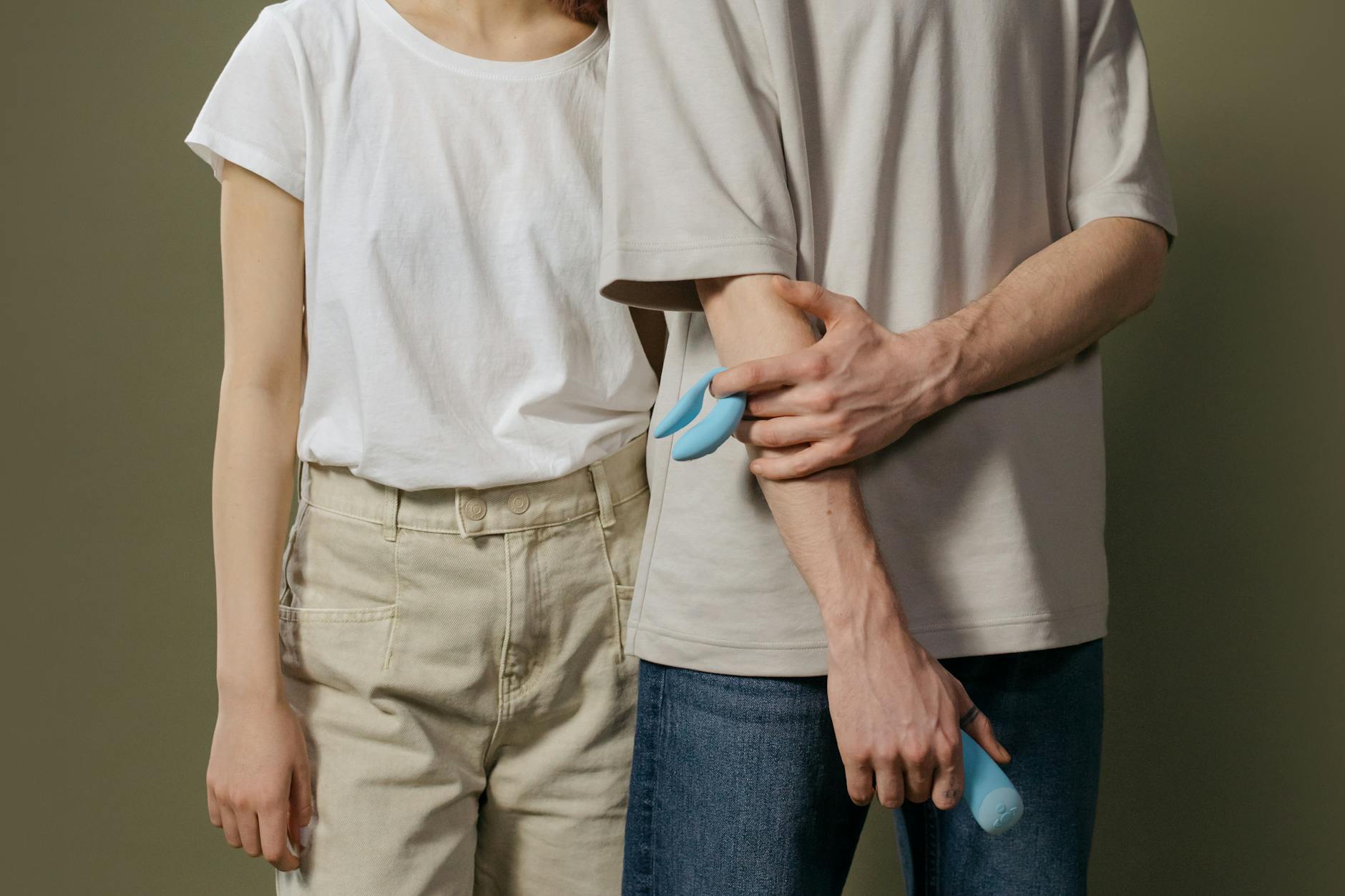
How to Use Lemon Vibrators After Vaginal Thinning From Estrogen Loss
Let's be real. When estrogen drops, your vaginal tissue gets thinner. It's not a moral failing, it's not permanent, and it doesn't mean your best orgasms are behind you. But it does change how stimulation feels, and if you're used to traditional vibrators, the shift can feel jarring.
The good news: lemon vibrators, with their air suction design, often work better with thinned tissue than the toys you used before. Here's why, and how to actually use one when your body has changed.
What estrogen loss does to tissue
Estrogen keeps vaginal tissue thick, elastic, and well-lubricated. When it drops (whether from menopause, certain medications, hormonal birth control, or breastfeeding), the tissue becomes thinner and more fragile. The vaginal walls feel drier. The clitoral hood loses some cushioning. Your body takes longer to warm up.
None of this means you've lost the ability to feel pleasure. The nerve endings are still there. The clitoral structure hasn't changed. What has changed is the mechanical environment those nerves live in.
Think of it like this: if you've ever had chapped lips, you know that rubbing your lips together feels sharp and uncomfortable. But touching them gently with a soft cloth feels fine. Same nerve endings, different stimulation.
Why lemon vibrators adapt better than traditional toys
Traditional vibrators work by rapid friction. They're designed to press against tissue and vibrate at high frequency. When tissue is thick and well-lubricated, this feels amazing. When tissue is thin, that same pressure can feel raw or even painful.
Lem vibrators use air suction instead. Rather than vibrating against your skin, they create gentle waves of suction and release. The sensation is more diffuse. It engages a wider area of tissue rather than concentrating force in one spot.
For vulvas affected by estrogen loss, this is a game-changer. Suction doesn't require friction. It doesn't rely on thickness. It actually works better on sensitive, delicate tissue because the stimulation is gentler and more spread out.
This is why so many people report that their first lem vibrator feels dramatically different from previous toys. It's not that you've lost sensation. It's that you've finally found a tool that matches your tissue's actual needs right now.
The three biggest adjustment shifts
Shift 1: Pressure resets low.
Start with the lowest suction setting. Literally don't skip this step. If you jump to pattern 3 or 4 like you might have with a traditional vibrator, you'll overwhelm tissue that's not used to that intensity anymore.
Begin at pattern 1 and spend a full minute there. Let your body remember what stimulation feels like without friction. Once that feels warm and pleasurable (not just present), move to pattern 2. You may never need to go higher. Many people with hormone-related tissue thinning find patterns 1 and 2 are where the magic happens.
Shift 2: Warm-up time doubles.
When estrogen is present, blood flow to the vulva happens fast. Your body practically announces readiness. With lower estrogen, arousal builds more gradually. Plan for 20-30 minutes of foreplay or solo touch before introducing the lem vibrator. This gives your body time to build blood flow naturally.
If you jump straight to the toy, you might think the toy isn't working. Actually, your tissue just isn't engorged yet. The suction works better when there's some natural swelling happening.
Shift 3: Lubrication becomes non-negotiable.
This isn't a failure of your body. It's a normal shift with hormone changes. Use a water-based lubricant every single time, even if you're also naturally lubricated. The extra layer protects tissue and makes the suction feel smoother.
Avoid silicone-based lubes with Hello Nancy's lemon vibrators because silicone can damage the silicone toy's surface. Stick to water-based. Reapply mid-session if needed. There's no shame in this. Your tissue is doing exactly what it's designed to do at this stage of your life.
Positioning and angle matter now
With thick, resilient tissue, you can use a vibrator at almost any angle and it feels fine. With thinner tissue, angle suddenly matters more.
Try using the lem vibrator with the clitoral hood still covering the clitoris, rather than pulling the hood back fully. This gives you the benefit of suction stimulation without direct contact on the most sensitive nerve endings. Many people find this feels incredible and actually produces stronger orgasms.
If you usually used vibrators lying on your back, experiment with sitting or kneeling. Different positions create different pressure points and blood flow patterns. You might find that a position you never loved before now feels perfect.
Connection to partner play (if that applies to you)
If you're using a lem vibrator with a partner, communicate before, during, and after. Estrogen loss can feel vulnerable emotionally, even when you're excited about exploring it. Tell your partner what you're learning about your body.
Many couples find that using a clitoral vibrator during partnered sex actually rebuilds intimacy because it takes pressure off the partner to "deliver" the orgasm. The toy does its job. Your partner focuses on touch, connection, and what feels good for them. This often leads to more simultaneous pleasure and less performance pressure for everyone.
If penetration is part of your sex life and has become uncomfortable due to tissue thinning, using a lem vibrator for clitoral stimulation while your partner enters is often the sweet spot. You get the sensation you want without discomfort.
When to add topical estrogen
Lem vibrators and smart technique can help enormously. But if penetration is painful, or if you're experiencing persistent itching or burning, topical estrogen cream is worth discussing with your doctor.
Topical estrogen (like estradiol or conjugated estrogens) rebuilds tissue thickness over 8-12 weeks. It has minimal systemic absorption, meaning it doesn't carry the same risks as systemic hormone therapy. It's prescribed conservatively in some regions but widely used in others. A menopause-informed GP or gynecologist can walk you through whether it's right for you.
Using a lem vibrator and topical estrogen together often accelerates progress. As tissue rebuilds, sensation often deepens. You might find yourself gravitating back to higher suction patterns, or discovering orgasm intensity you thought was gone.
The retraining phase (and why it's temporary)
After estrogen loss, your nervous system sometimes needs time to re-calibrate what "pleasure" feels like with a different body. You might notice that the lem vibrator doesn't produce an orgasm the first few times, even though you can feel it working. This is normal and temporary.
Your body isn't broken. It's learning a new language. Use the vibrator 2-3 times a week without putting pressure on yourself to orgasm. Focus on sensation. Notice what patterns feel best. Notice what time of day your body responds most readily.
Within 2-4 weeks, most people report that sensation deepens and orgasms return. Many describe them as different than before, but not worse. Smaller, sometimes, but also more localized or more intense in unexpected ways.
What to avoid
Don't use traditional vibrators as a fallback. If the lem vibrator feels gentler than you expected, resist the urge to switch back to a toy with more vibration. Your tissue will thank you for the gentleness, even if it takes a few weeks to feel "enough."
Don't assume pain is normal. If the lem vibrator causes sharp pain (not just sensitivity), stop and rest. Pain is information. It usually means you need more warm-up time, more lubrication, or medical attention.
Don't skip the water-based lube to "see what happens." You'll feel the difference immediately. Lubrication protects tissue and makes the suction sensation clearer and smoother. It's not cheating. It's smart.
The long view
Estrogen loss is a transition, not a destination. Your body isn't permanently altered. With the right approach, sensation often becomes richer, not poorer. Many people report that their most intense orgasms happen in the years after their estrogen drops, once they've stopped fighting their body's changes and started working with them.
A lem vibrator isn't a substitute for medical care if you need it. But it's also often the tool that makes pleasure feel possible again when other toys have stopped working. Your nervous system is still fully capable of pleasure. Your body just needs you to listen to what it's telling you.
Start low. Warm up longer. Use lubricant. Be patient. Your best sexual years might genuinely be ahead of you.
People also ask
Can I use a lemon vibrator if I have vaginal atrophy?
Yes. In fact, lem vibrators are often easier on tissue affected by vaginal atrophy because they use suction rather than vibration and friction. Start with the lowest setting, use water-based lubricant, and warm up for 20-30 minutes before use. If penetration is uncomfortable due to tissue thinning, focus clitoral stimulation with the lem vibrator while avoiding internal contact until tissue rebuilds (with time, topical estrogen, or both).
Do I need topical estrogen if I'm using a lemon vibrator?
Not necessarily. Many people find that lemon clitoral vibrators work well enough on their own with extended warm-up and lubrication. But if you're experiencing pain during penetration, persistent itching, or burning sensations, topical estrogen cream is worth discussing with a menopause-informed doctor. It rebuilds tissue over 8-12 weeks and pairs well with vibrator use.
Will a lemon vibrator feel less intense after estrogen loss?
At first, possibly. But this usually changes within 2-4 weeks as your nervous system adjusts to the new sensation of suction. Many people report that once they stop comparing it to their previous experience, lemon vibrators actually produce stronger orgasms because the stimulation is more precise and less friction-dependent. The key is patience and consistent warm-up.
How often should I use a lemon vibrator if my tissue is thin?
Start with 2-3 times per week. This gives your body time to recover between sessions while allowing your nervous system to recalibrate. Once sensation deepens and you're comfortable, you can use it as often as you'd like. More frequent use doesn't damage thin tissue if you're using lubrication and appropriate suction levels.
Why does my lemon vibrator sometimes feel numb after a few minutes?
This is usually a sign that either you need a brief break (30 seconds to a minute), or you need to adjust the suction level or position slightly. Thinned tissue can become temporarily desensitized if overstimulated. Rather than increasing intensity, try changing the pattern or taking a short pause. Often, backing off slightly resets sensation and makes the next waves of stimulation feel stronger.
Is it normal for sensation to feel different with estrogen loss?
Completely normal. Estrogen affects nerve sensitivity, blood flow, and tissue thickness. When it drops, sensation changes. This isn't permanent, and it doesn't mean you've lost pleasure capacity. It means your body is responding to hormonal shifts. Most people adapt within a few weeks with the right tool (like a lem vibrator) and approach (warm-up, lubrication, patience).
For more on navigating pleasure through body changes, read how air suction lemon vibrators improve orgasms with hormonal changes or why lemon vibrators work better for sensitive vulvas than traditional vibrators. And if you're navigating these shifts within a relationship, our guide on how lemon vibrators help long-term partners reignite intimacy might help spark conversation.
If you have questions about your specific situation, reach out. We're here to help.